
Two Steps Forward, One Step Back: Building Readers at Home
Family life with children often feels like this, doesn’t it?
You make progress in one area… and somehow take a step backwards in another.
We’ve had one of those weekends recently. And it reminded me of something important about learning to read.
A small family milestone
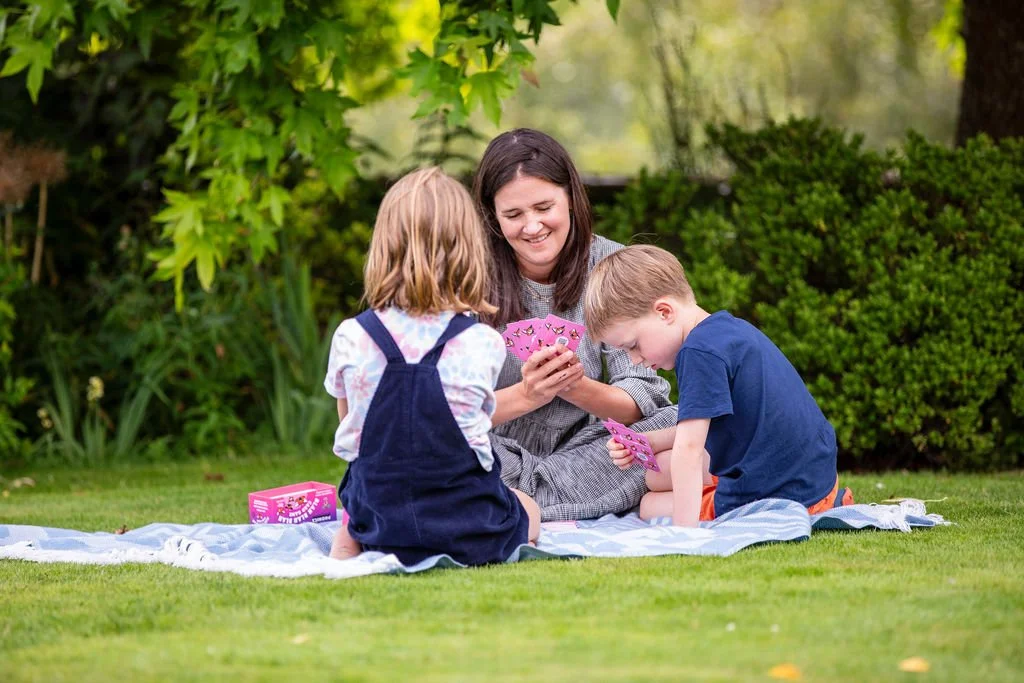
I have three children, with just over three years between each of them. Which means I’ve been living in the toddler years for almost a decade now.
Ten years of buggy walks.
Snack stops.
Carrying tired legs.
Persuading reluctant little people to take “just five more steps.”
And this weekend, for the first time, something shifted.
My husband suggested a six-kilometre walk. The older two took their bikes, the youngest her scooter… and somehow, miraculously, nobody complained. Nobody stopped. Nobody needed carrying.
This is unheard of in our house.
After years of family walks with at least one child on our shoulders, we walked and talked for two whole hours while they whizzed ahead of us. I felt a quiet optimism — a sense that we were stepping into a new phase of family life.
I don’t want to rush these years away. I know I’ll miss the snotty noses and small hands terribly. But I could feel a chapter closing… and another beginning.
And then, in true parenting fashion, something else felt harder.
When reading suddenly feels difficult again

That same weekend, my son completely lost motivation for his decodable phonics books.
He avoided them.
Delayed them.
And for the first time in a long while, reading homework ended in tears.
I felt the familiar worry creep in.
Is this going backwards?
Am I letting him avoid something important?
Have I done something wrong?
And then I reminded myself of something I say to parents all the time.
Children don’t learn to love reading from one type of book alone.
The three types of books every child needs
If we want children to become confident readers — and children who choose to read — they need more than one kind of book.
In fact, there are three.
1. Decodable phonics books
These are the books children bring home in the early years of school.
They are carefully matched to what children have been taught in phonics and are designed to build decoding, accuracy, and fluency through repetition.
They are essential.
They teach children how to read.
But — and this matters — they don’t always teach children to love reading.
And both matter.
2. Books you read aloud to them
These are the stories you share together.
Picture books.
Chapter books.
Old favourites. New discoveries.
These books build vocabulary and comprehension. They expose children to language far beyond what they can read independently.
This is where imagination grows.
This is where empathy develops.
This is often where a love of reading begins.
3. Something they choose themselves
This is the part we sometimes underestimate.
If children are going to enjoy reading, they need choice — and they need to know that anything counts.
Comics.
Magazines.
Joke books.
Fact books.
Football programmes.
Song lyrics.
If they’re reading it, it matters.
And just as importantly — it takes the pressure off.
Letting the comics win
So back to my son.
On the days when phonics feels hard, I’ve started letting the comics win.
Because comics still count.
Reading is still happening.
And most importantly, reading stays positive.
At home, we really have two jobs:
• Support our children to learn to read (you don’t need to be a professional reading tutor)
• Show them that reading is something to enjoy
When reading becomes only about speed, accuracy, and homework, motivation can disappears quickly.
But when reading also feels relaxed, chosen, and joyful, children keep coming back to it.
Why this matters more than ever
Reading is one of the most important skills we can give our children.
And in a world full of screens, noise, and constant distraction, it matters more than ever.
Reading stills their minds.
It builds empathy.
It helps them make sense of the world.
But perhaps most importantly — children who enjoy reading are the children who keep reading.
.
If you’d like some book ideas, I’ve put together a growing list of my favourite children’s books by age and stage — and I’ll be adding to these regularly.
You can explore everything here:
👉 https://uk.bookshop.org/shop/readingrootsuk
You’ll also find gentle, practical phonics support for home, including:
guidance for teaching reading with confidence
phonics resources and tools
online training and recommended reads
And for ease, I also keep all links in one simple place — especially helpful if you’re browsing on your phone:
👉 https://linktr.ee/readingroots
If you’re ever unsure where to begin, either of these is a lovely place to start.
